There are tens of thousands of Christian denominations in the world. Lutheran, Baptist, Methodist, Catholic, Pentecostal, Presbyterian, and hundreds more. They all read the same Bible. They all say they follow the same God and the same Jesus. Yet they cannot agree on baptism, on communion, on salvation, on who is “in” and who is “out,” on heaven and hell, on almost everything.
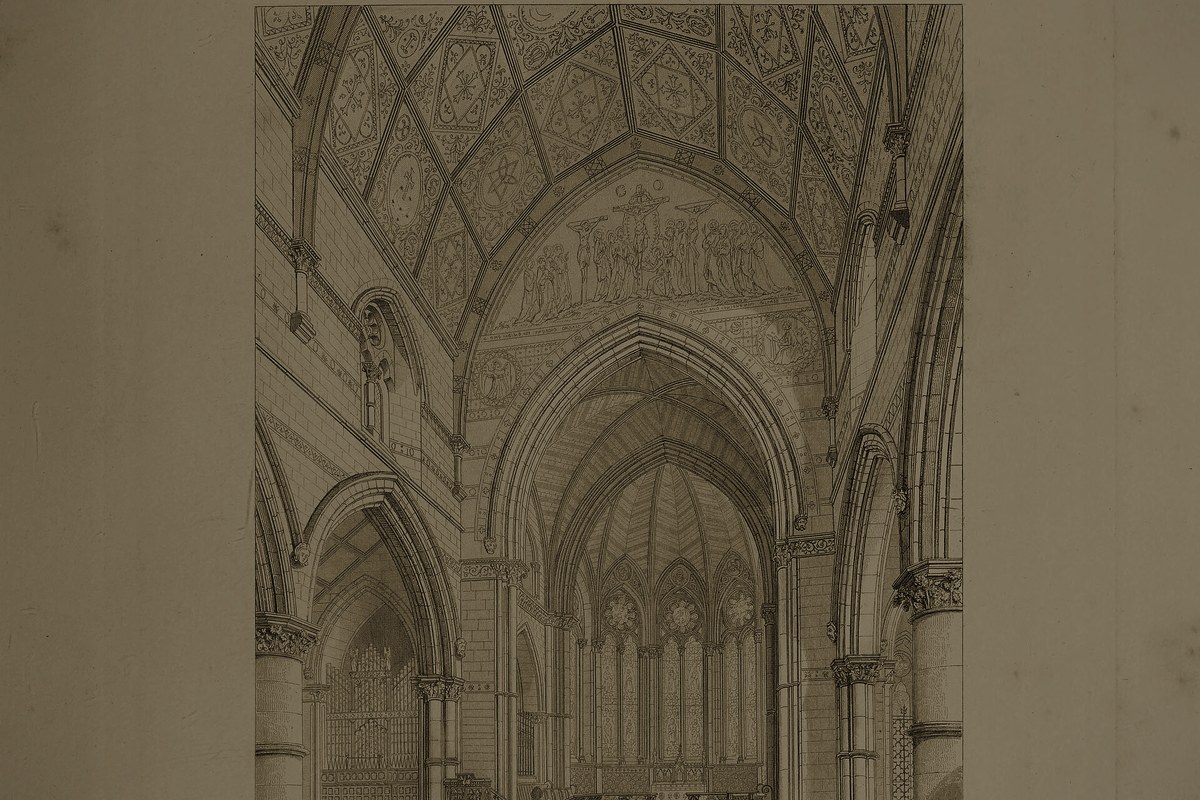
If God gave one clear book, should one clear truth come out of it? Instead, honest people notice the opposite. Every church is confident it has the right answer, and every other church is confident it has that one wrong.
The spiritual explanation is different from the obvious one. The reason the world cannot agree is that no one has ever fully agreed to begin with — not because the answers are missing, but because the whole approach is pointed in the wrong direction.
Why the arguments never end
Watch a church fight long enough — in a congregation, a denomination, or online — and you will see the same thing every time. The fight is over the letter. Over a verse, a ritual, a rule, a historical question. Nobody fights about states of mind. People fight about events and objects and rules, because they were taught to read the Bible as a book of literal history and law.
If the Bible is a book about what actually happened out there — rivers, battles, governments, a man named Jesus who died on a hill — then it is fair to argue about what those outer facts mean. But if the Bible is really a symbolic manual of the human mind, then every “church” is one narrow way of fighting over the surface of a thing that was never meant to be read that way.
The denominations do not disagree because one is right and the rest are wrong. They all disagree because they are all reading the letter instead of the meaning behind it. Each built a whole theology out of the words, while the living truth the words point to sits unrealized in every single one of them.
The bigger question hiding underneath
When you pull back from “which church is right,” a far larger question appears: what if the whole Bible — every church included — is pointing to something inside you, and not to an institution at all?
Read it that way and the divisions stop being a problem. They become evidence. If God is a state of oneness within every mind, then a hundred churches chopping truth into a hundred denominations is exactly what a literal reading produces — while the truth underneath it is the same, whole, and undisturbed beneath all of them.
The teaching hidden in the text was never meant to organize into factions. It was meant to wake up a person's own mind. The ark is not a boat that only the “right” group is on. The kingdom is not a church you join. It is within you, and every institution is just a different way of trying to reach it from the outside.
Where the answer actually lives
That is why this dictionary exists. Not to start one more church, and not to say any church has it all wrong — but to point back at the original thing. Jesus is your imagination. The cross is your own body. Golgotha is the skull where the crucifixion of the old self happens. The serpent is untamed desire. The ark is your mind rising above the flood of confusion.
When you meet that teaching, something settles. You stop needing a church to be right. You stop needing anyone to agree with you. You have found the thing the churches were reaching for — the truth that was inside you all along.
✦ This is only the surface ✦
Every word of the Bible carries a hidden meaning — and there is far deeper teaching in the Parallels, the full study library.
Enter the Member Library Join on Telegram