Seven days of creation. Seven pairs of clean animals on the ark. Seven years of famine in Egypt. Seven trumpets, seven seals, seven bowls, seven spirits, seven churches. Forgive a man seventy times seven. The number shows up so relentlessly that most readers stop seeing it, the way you stop hearing a clock.
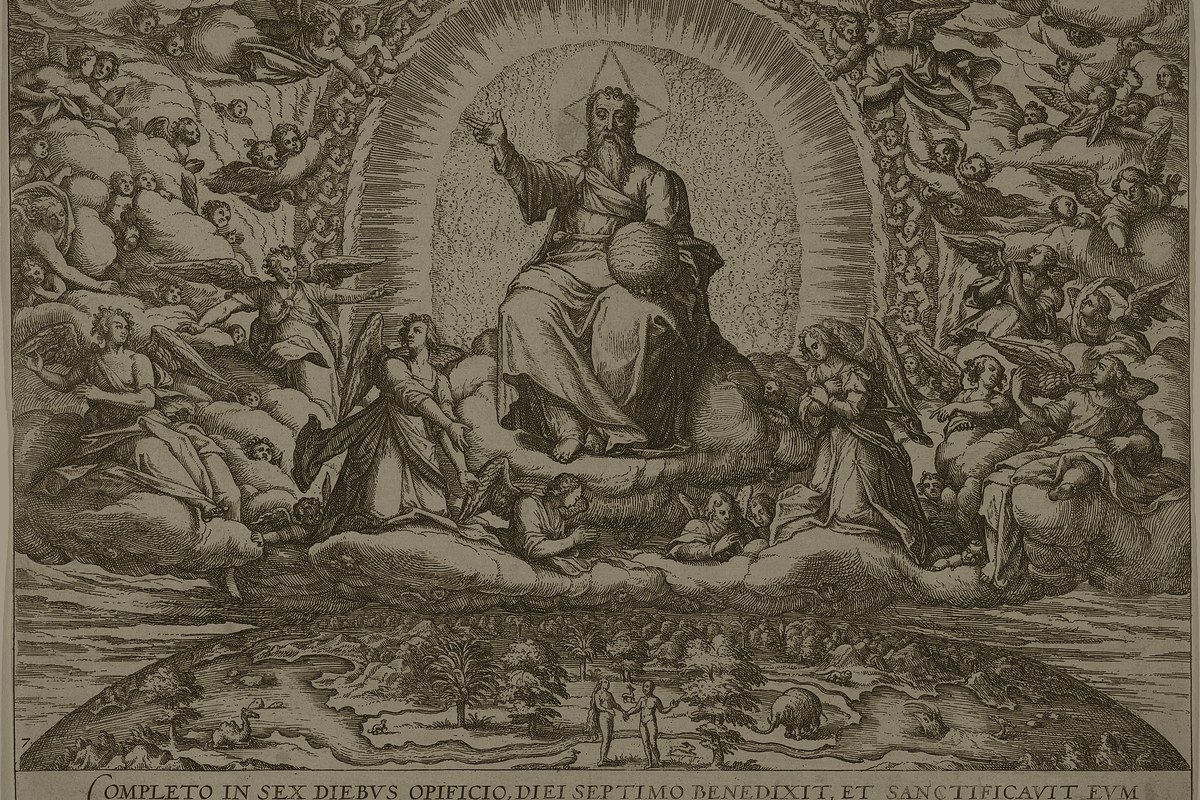
Seven in the Bible means completion. Not "a lot," not "lucky," not "perfect" in the sense of flawless. It means a thing is whole, and nothing can be added to it.
The Clue Is in the First Week
God works six days and rests on the seventh. Ask the obvious question: why rest if you are God? Not because of tiredness. The seventh day is in the story to show you what finishing looks like. The work is done, the assessment is "very good," and nothing remains to be done. Six days of building, then a day that adds nothing because nothing is needed.
That shape rules the whole book. Wherever seven appears, look for the same structure — six of effort, then a seventh that closes it. Seven years of famine end. Seven trumpets finish. The seventh seal opens and heaven itself goes quiet for half an hour, because there is nothing left to say.
Why Seventy Times Seven Is Not Arithmetic
Peter asks how many times he has to forgive his brother. Seven times, he suggests, feeling generous. Jesus answers seventy times seven.
If you do the math you get four hundred ninety, and then you are keeping a count — which is the opposite of what was asked. The number is not a quota. It is completion stacked on completion. Seventy times seven means you stop counting entirely, because a mind that has actually forgiven has no ledger left to check.
Seven and the Mind
None of these sevens are about calendars or animals. They are about what a finished inner state looks like.
When a person holds a grudge, the grudge runs a loop. When a person is afraid, the fear runs a loop. A loop is the opposite of seven — it is a thing that never finishes, so it has to start again. Seven is the state where the loop closes. The work gets done, the question gets answered, the grief gets grieved, and the mind can finally rest.
This is why the Bible treats rest as holy rather than lazy. Rest is only possible after completion. Anyone can stop working. Only a finished thing can actually rest.
The Seventh Day Is a State, Not a Saturday
The Sabbath was never primarily a day of the week. It is the inner rest that follows a completed work of mind. That is why Jesus says the Sabbath was made for man — a gift, not a rule. A person who has finished what they were doing can rest on a Tuesday. A person who has not finished cannot rest on a Sunday, no matter what the calendar says.
How to Use the Number
When you find yourself circling the same problem for the tenth time, you are living in six. The work is not finished, so rest is impossible, and no amount of distraction will substitute for it.
The question seven asks is simple. What would finish this? Not what would numb it, not what would postpone it — what would actually close it. Answer that, do that, and the seventh day arrives on its own. That is the promise the number keeps making all the way from Genesis to the last page of Revelation.
Seven is not lucky. Seven is done.
✦ This is only the surface ✦
Every word of the Bible carries a hidden meaning — and there is far deeper teaching in the Parallels, the full study library.
Enter the Member Library Join on Telegram